A 25 year old woman is brought in by ambulance after a T-bone car collision. She was the driver of the car that was hit in the driver's side at high speed.
She is 36 weeks pregnant and is otherwise well. She is complaining of severe abdominal pain only.
Her observations are BP 100/60 mmHg, HR 140/min, RR 28/min, oxygen saturation 98% on room air, temperature 36.8 C, and GCS 15.
Monitoring is applied and shown below.
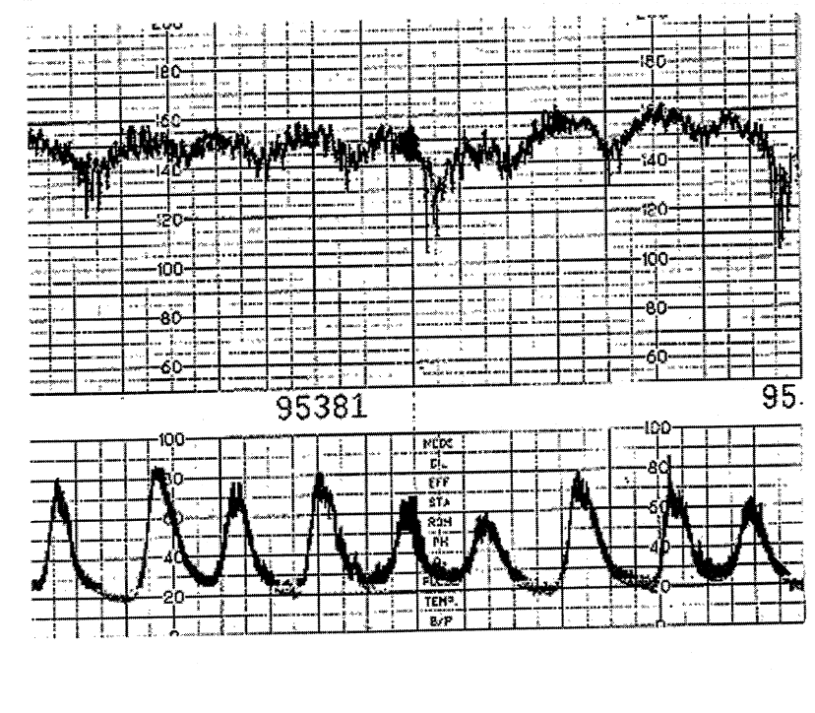
How would you assess foetal viability in this patient? List three points.
(Marked out of 3.0)
/ 3
State four key treatment principles for this patient.
(Marked out of 4.0)
/ 4
The general surgical registrar suggests a pan scan. State two possible appropriate arguments for pan scan in this patient.
(Marked out of 2.0)
/ 2
State two possible appropriate arguments against pan scan in this patient.
(Marked out of 2.0)
/ 2
List three pieces of information gained from this monitoring.
(Marked out of 3.0)
/ 3
In general, list four signs of foetal distress that you may see in this type of monitoring.
(Marked out of 4.0)
/ 4
Total Score: 0 / 18
Percentage: 0%
Comments are closed for this SAQ.