SAQ 122 – Cardiology – Brugada syndrome after syncope
Model Answer
Question 1. Brugada syndrome after syncope.
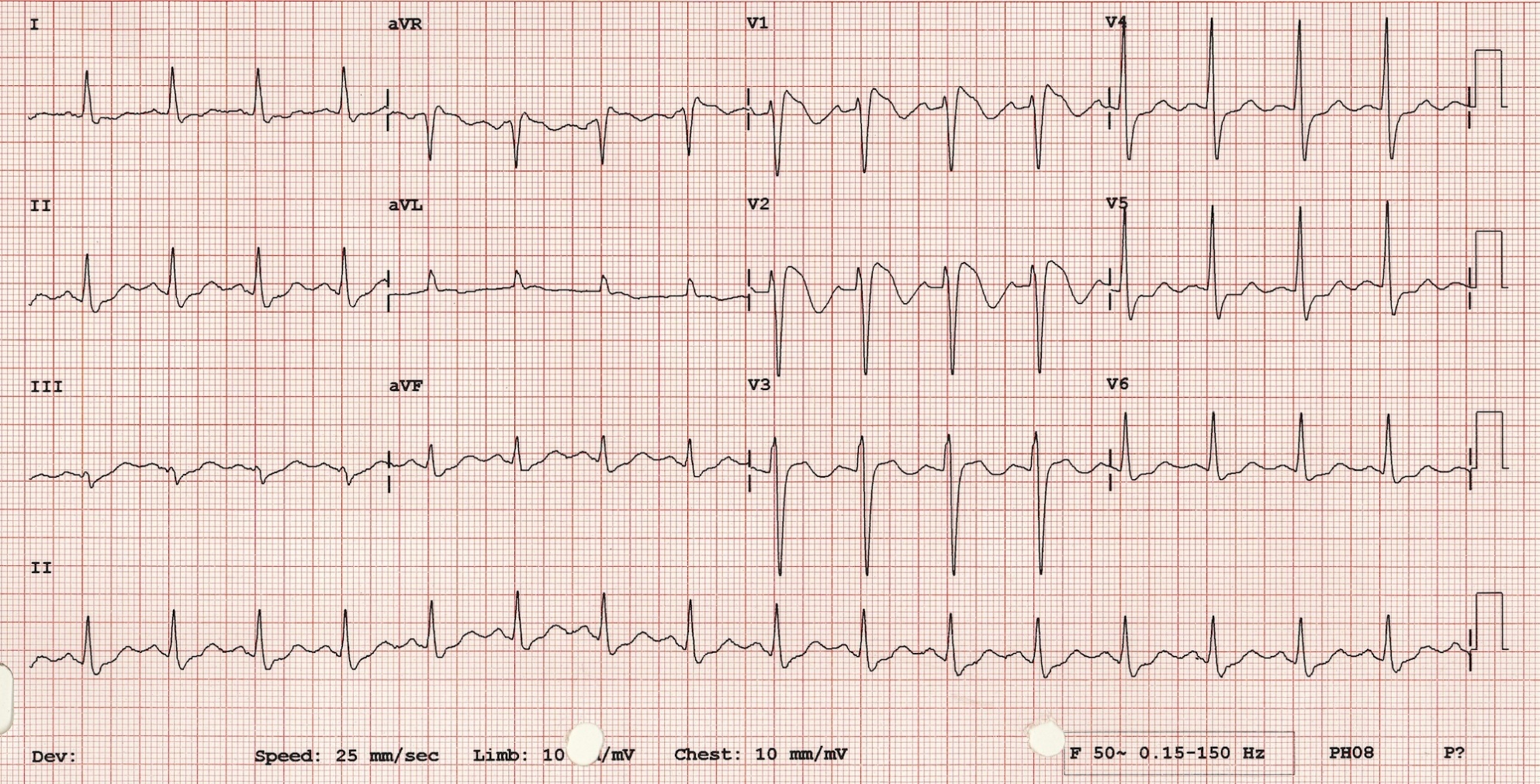
a. ECG abnormalities
- Sinus tachycardia around 100 bpm.
- ST elevation about 4 mm in V1-V2.
- Downsloping or coved ST elevation / Brugada sign followed by inverted T wave.
- ST depression about 2 mm in V4-V6, II, III, and aVF.
- T-wave abnormalities in V1-V2 and aVL; biphasic T wave in V3.
b. Significance
- In association with syncope, this is diagnostic of Brugada syndrome.
- Needs admission to a monitored bed to monitor for malignant arrhythmia.
- High untreated mortality from ventricular fibrillation, around 10% per year.
- Type 1 coved ST elevation greater than 2 mm in more than one of V1-V3 followed by a negative T wave is the potentially diagnostic ECG pattern.
c. Pathophysiological basis
- Mutation in a sodium channel gene causing a sodium channelopathy.
- May be spontaneous or familial with autosomal dominant clustering.
- Subendocardial fibrosis or replacement of myocardium with adipose tissue.
d. Precipitants
- Drugs such as sodium-channel blockers, calcium-channel blockers, beta blockers, nitrates, and cholinergic stimulation.
- Alcohol.
- Cocaine.
- Fever.
- Myocardial ischaemia.
- Hypokalaemia.
- Post-DCR.
- Hypothermia.
e. Associated clinical features
- Ventricular fibrillation.
- Polymorphic ventricular tachycardia.
- Family history of sudden cardiac death under 25 years.
- Coved-type ECGs in family members.
- Inducible VT with flecainide or electrical stimulation.
- Nocturnal agonal respiration.
f. Treatment
- AICD.
- Quinidine if AICD is contraindicated, for example in a neonate.
Comments are closed for this SAQ.