A 45 year old man is brought into your emergency department, by ambulance, with isolated severe pain in his right hip after a fall from his motorbike one hour earlier.
He has a past history of IVDU. The ambulance officers were unable to obtain IV access and have provided penthrane for analgesia alone.
His ambulance handover observations are: BP 95/50 mmHg, HR 130 bpm, RR 24 bpm, oxygen saturations 98% RA, GCS 15.
His primary survey, including a FAST scan, is negative. You arrange a trauma series plain x-ray.
State five (5) steps in your initial approach to provision of analgesia. Include any drug doses and routes.
(Marked out of 5.0)
/ 5
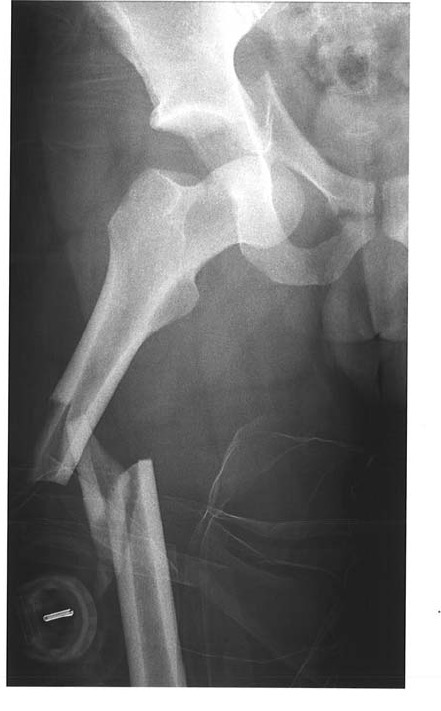
A hip x-ray is shown below. State five (5) abnormal findings shown in this x-ray.
(Marked out of 5.0)
/ 5
His injuries are confirmed to be isolated to those shown in the hip x-ray only. Despite your initial provision of analgesia, he continues to complain of severe pain. State two (2) points in your on-going approach to his analgesia. Include any drug doses and routes.
(Marked out of 2.0)
/ 2
Total Score: 0 / 12
Percentage: 0%
Comments are closed for this SAQ.