SAQ 104 – Stroke – acute ischaemic stroke and disclosure
Model Answer
Question 1. acute ischaemic stroke and disclosure.
a. ROSIER scale
- Emergency department clinical assessment tool for suspected stroke.
- Risk stratifies patients according to likelihood of stroke.
- Validated for ED use after triage.
- Uses clinical information including conscious state, blood glucose, blood pressure, unilateral weakness, speech disturbance, and visual disturbance.
- Widely recommended in ED stroke pathways.
b. Thrombolysis inclusion features
- Age greater than 18 years.
- Treatment can begin within 4.5 hours of symptom onset.
- Clinically definite stroke with new persistent focal neurological deficit.
- Significant measurable deficit, for example NIHSS greater than 4.
- Non-contrast CT brain has excluded intracranial haemorrhage.
- Immediate access to imaging and staff able to interpret it.
- Neurologist or emergency physician authority for thrombolysis.
- Stroke team and post-thrombolysis monitoring pathway available, including blood pressure management.
c. Diagnosis
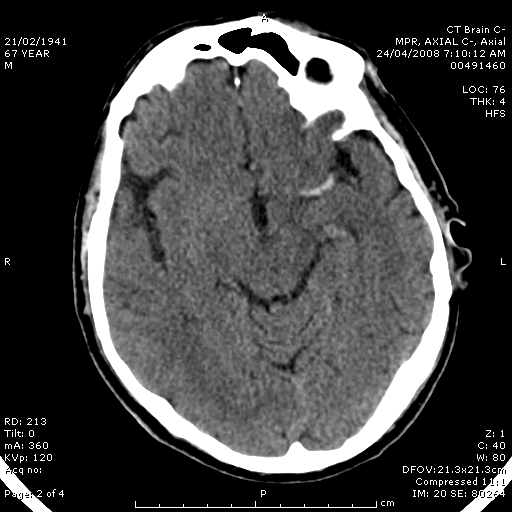
- Left middle cerebral artery infarction, with hyperdense clot sign.
d. Open disclosure elements
- Apology or expression of regret, including clear words such as I am sorry or we are sorry.
- Factual explanation of what happened.
- Opportunity for the patient or family to describe their experience of the adverse event.
- Discussion of the potential consequences of the adverse event.
- Explanation of steps being taken to manage the event and prevent recurrence.
e. Decompressive craniectomy factors
- Age less than 60 years.
- Reduced conscious state.
- Clinical or radiological features of raised intracranial pressure.
- Large or malignant MCA infarction involving more than 50% of the MCA territory.
- Ability to operate within 48 hours of stroke onset.
- Limited access to thrombolysis or stroke-unit facilities may support the role of surgery in selected settings.
Comments are closed for this SAQ.