A 32-year-old man is brought to the ED after a high-speed motor vehicle accident. He was intubated in the field for severe respiratory distress, with no evidence of head injury. His initial chest X-ray is shown.
He appears pale and sweaty. His pulse is 140/min, BP 65/45 mmHg, and oxygen saturation 92% on FiO2 1.0. Pelvic X-ray is normal and there are no long-bone injuries. FAST imaging from the right upper quadrant is shown.
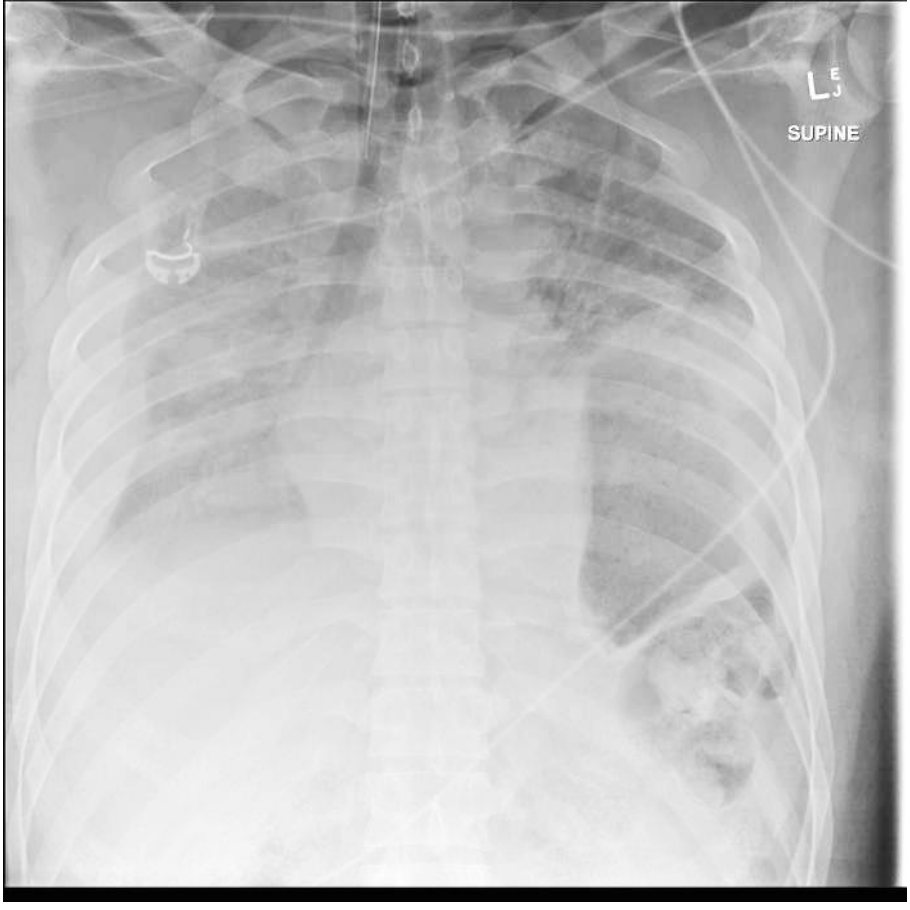 Initial chest X-ray.
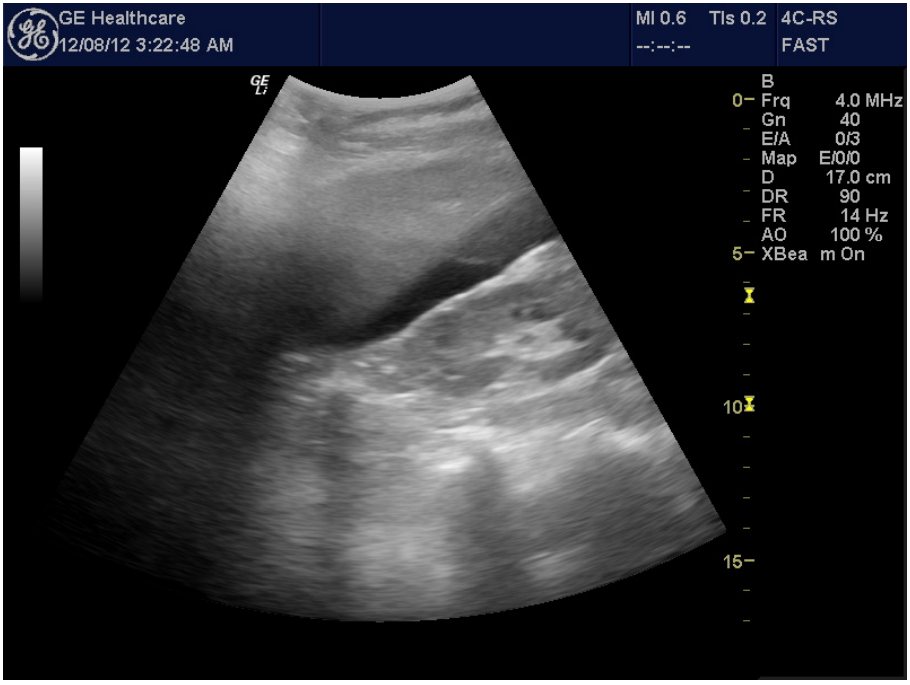 FAST right upper quadrant image.
List three pathological processes on the chest X-ray. For each, provide radiological evidence.
(Marked out of 6.0)
/ 6
Give your interpretation of the FAST image.
(Marked out of 2.0)
/ 2
State your fluid resuscitation principles, including endpoints.
(Marked out of 3.0)
/ 3
List your four main management steps apart from fluid resuscitation.
(Marked out of 4.0)
/ 4
Total Score: 0 / 15
Percentage: 0%
Comments are closed for this SAQ.