A 55-year-old woman is being transported by ambulance after out-of-hospital cardiac arrest. The initial rhythm was PEA and ROSC occurred after 15 minutes of ALS, including CPR, 3 mg adrenaline, and intubation.
The handover describes a sudden collapse with no preceding symptoms. The ECG and CT head image are shown below.
She has received no sedation or paralysis and remains GCS 3. Shortly after CT she becomes hypoxic and the ventilator alarms for high pressure.
| Parameter |
Value |
| GCS |
3 |
| Pulse |
90/min |
| BP |
165/96 mmHg |
| Oxygen saturation |
100% on FiO2 100% |
| Temperature |
35.5 degrees |
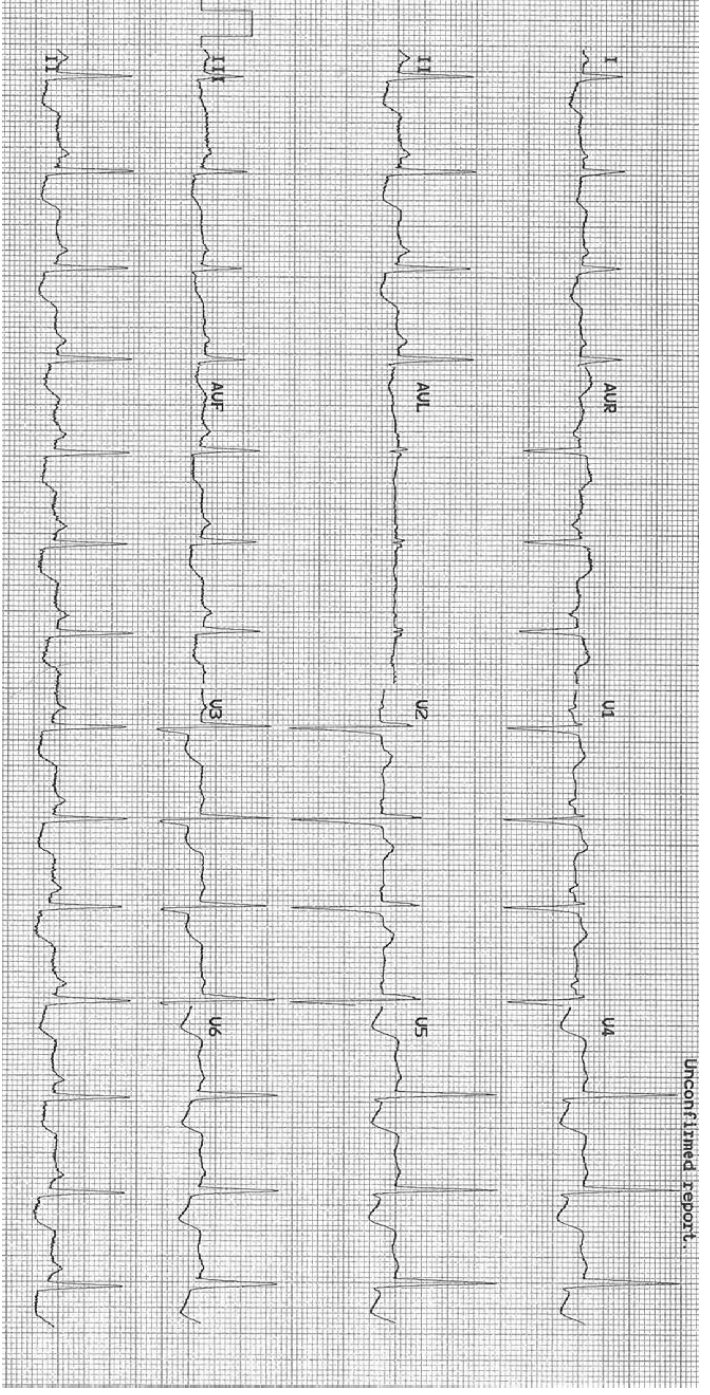 Post-ROSC ECG.
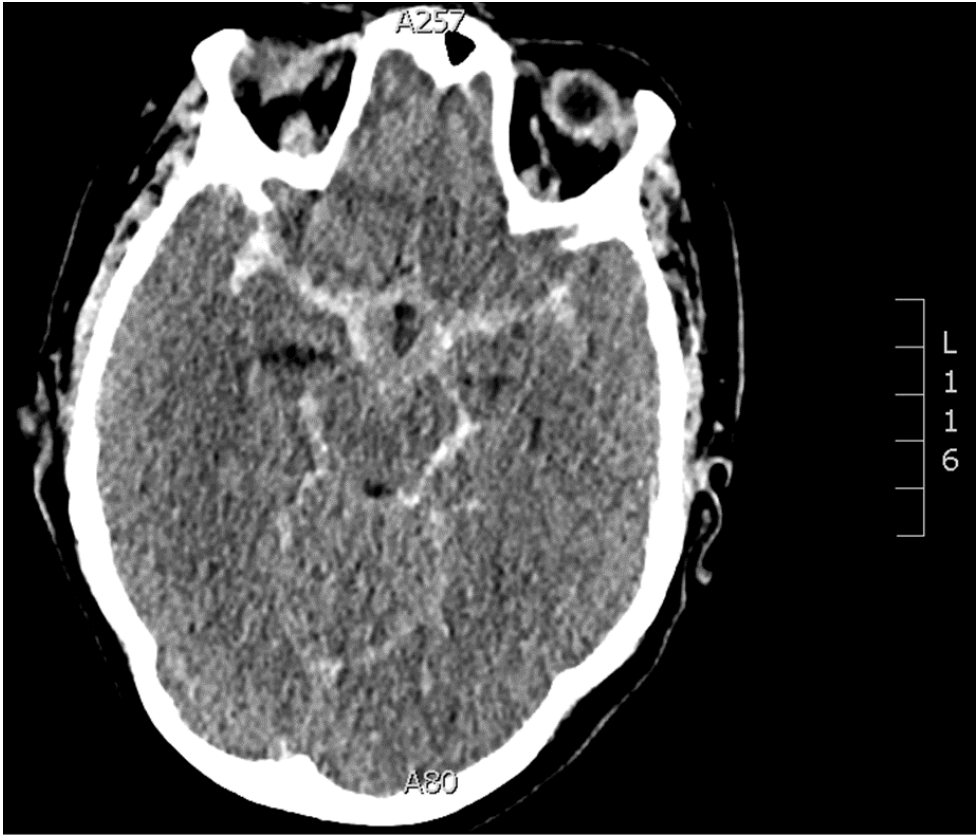 CT brain image.
With reference to ARC guidelines, list three recommended indications for emergent cardiac catheterisation after out-of-hospital cardiac arrest.
(Marked out of 3.0)
/ 3
List two key findings from the ECG.
(Marked out of 2.0)
/ 2
State the clinical significance of the ECG findings.
(Marked out of 2.0)
/ 2
State the diagnosis demonstrated on the CT scan.
(Marked out of 1.0)
/ 1
List four additional CT findings you would seek that would portend a poor prognosis.
(Marked out of 4.0)
/ 4
List five possible causes of hypoxia with high ventilator pressure. For each, provide a supportive assessment finding and the key intervention.
(Marked out of 15.0)
/ 15
Total Score: 0 / 27
Percentage: 0%
Comments are closed for this SAQ.