An 81-year-old man is brought by ambulance to a tertiary ED with reduced conscious state after neighbours found him in bed, unresponsive and incontinent of urine, after approximately 2 days.
Airway is patent, RR 17, SpO2 95% on 2 L oxygen, HR 93, BP 117/85 and temperature 36.4 degrees C. Neurologically, GCS is 6 (E1 V2 M3), pupils are 2 mm and sluggish, and there is left hemiplegia. BGL is 7.1.
Two non-contrast CT brain slices are shown. Later, collateral history confirms no past medical history, no regular medications and independent living. His brother and sister ask what has happened and what the prognosis is.
After discussion, a decision is made to palliate. He is comfortable and not distressed; the palliative care team asks you to chart PRN medications.
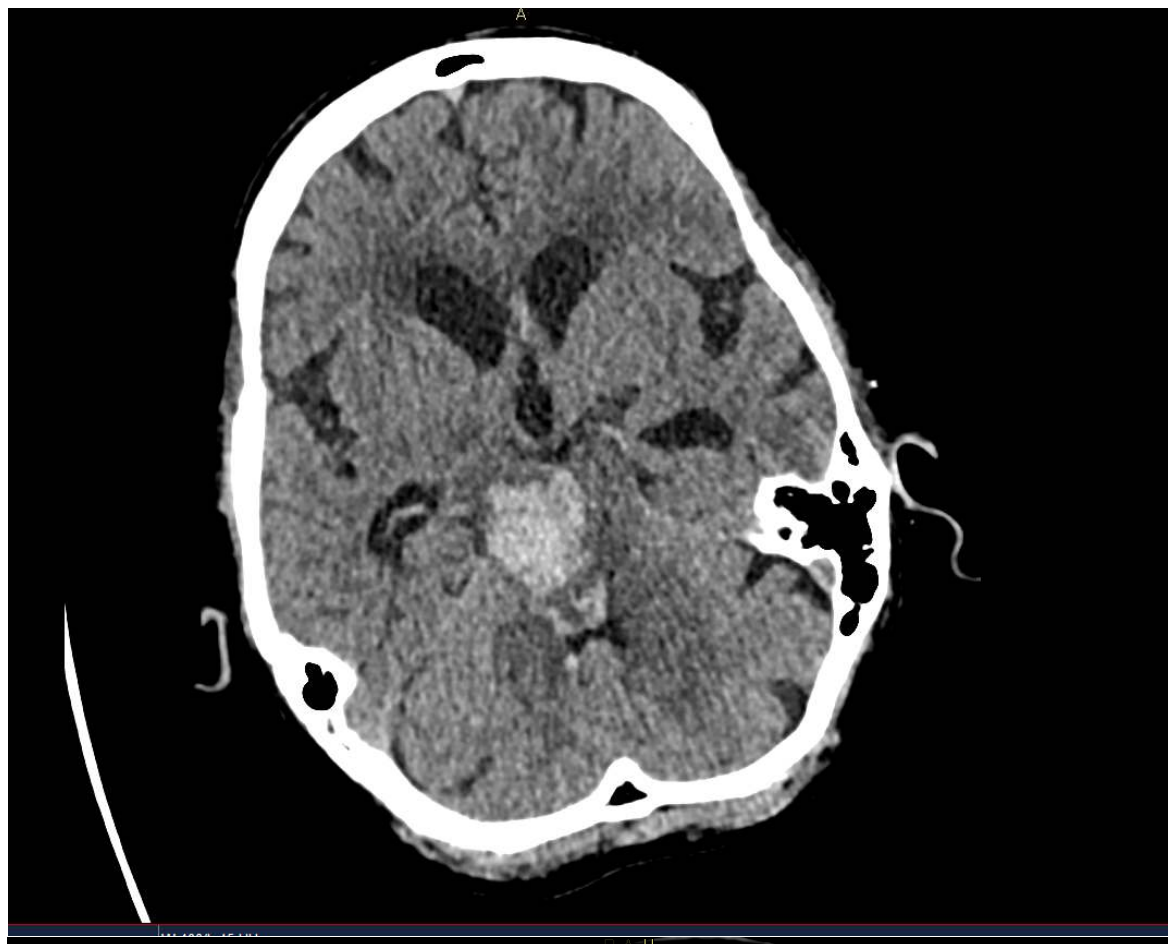 CT brain slice 1.
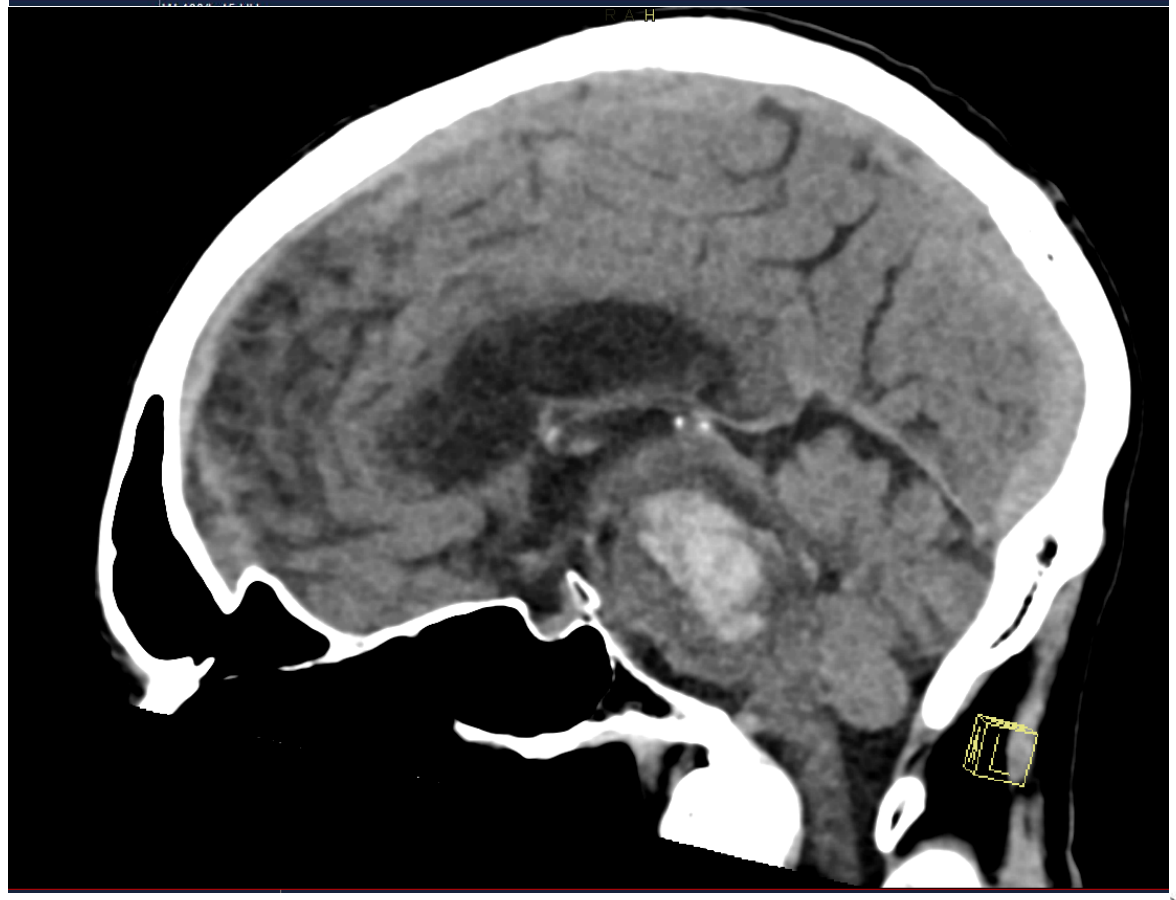 CT brain slice 2.
List two positive and two negative findings on the CT slice.
(Marked out of 4.0)
/ 4
State the unifying diagnosis.
(Marked out of 1.0)
/ 1
List important information to discuss with the relatives.
(Marked out of 5.0)
/ 5
List PRN palliative medications with indication and dosing regimen.
(Marked out of 8.0)
/ 8
Total Score: 0 / 18
Percentage: 0%
Comments are closed for this SAQ.