You are joining a mountaineering expedition as expedition medic. The target is Melungtse, altitude 7181 m, in the Rolwaling region of Nepal. You will remain at base camp at 4000 m. The experienced climbers have previously ascended to high altitude.
Before departure you are asked to prescribe prophylaxis for complications. During the expedition, one climber at 5000 m radios with headache, dizziness, nausea, vomiting, fatigue and insomnia. Assessment finds mild tachycardia, normothermia, mild peripheral oedema and normal chest auscultation. Supplemental oxygen is given. Expedition equipment is shown below.
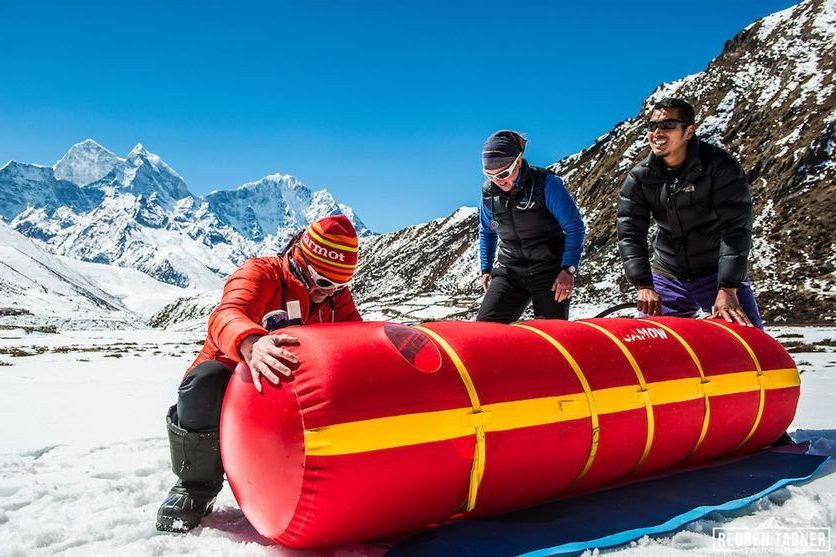 Expedition equipment.
State one (1) medication that could be used as prophylaxis for acute mountain sickness, including dose, and list a specific potential side effect.
(Marked out of 2.0)
/ 2
One climber declines prophylaxis. List three (3) steps you would take to counsel this team member.
(Marked out of 3.0)
/ 3
State the most likely diagnosis in the symptomatic climber.
(Marked out of 1.0)
/ 1
Other than oxygen, list two (2) non-pharmacological methods and two (2) pharmacological approaches to treatment.
(Marked out of 4.0)
/ 4
With reference to the equipment image, name or describe this piece of equipment.
(Marked out of 1.0)
/ 1
List one (1) clinical indication for its use.
(Marked out of 1.0)
/ 1
State the estimated ambient temperature expected at the summit if base-camp temperature is minus 10 degrees C.
(Marked out of 1.0)
/ 1
Total Score: 0 / 13
Percentage: 0%
Comments are closed for this SAQ.