You are working with a prehospital retrieval service and fly 150 km by rotary wing aircraft to an 18-year-old man injured in a motor vehicle crash. His observations are shown below. He has no stridor but mild respiratory distress.
| Observation |
Value |
| Temperature |
36.3 C |
| Heart rate |
110 beats/min |
| Blood pressure |
158/63 mmHg |
| Respiratory rate |
22/min |
| Oxygen saturation |
98% |
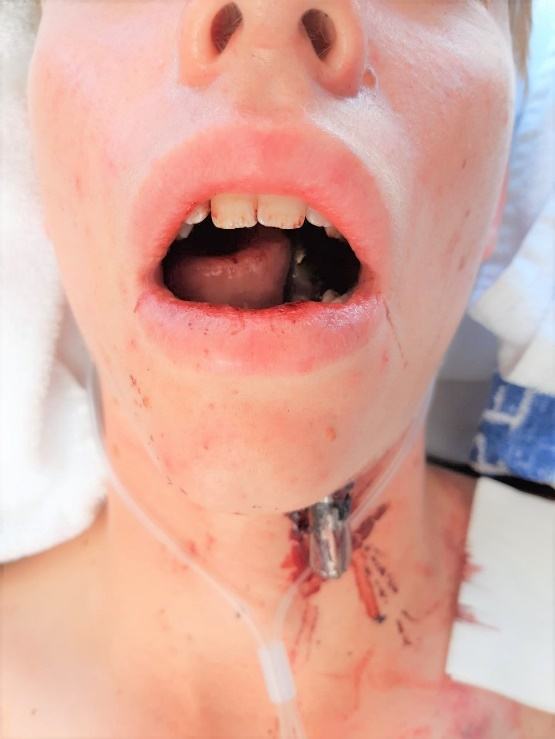 Clinical photograph
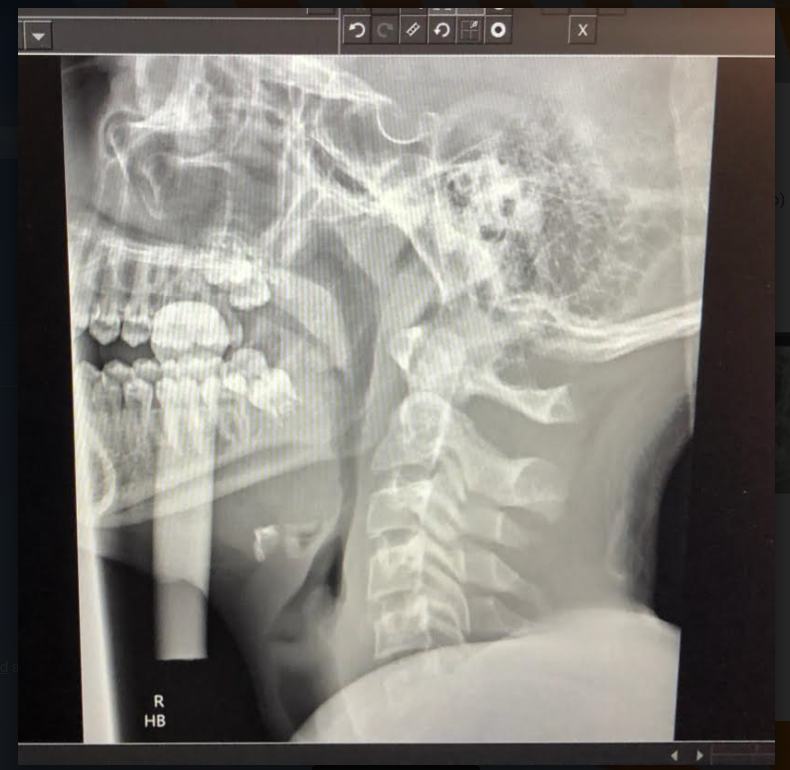 Lateral neck x-ray
Using the clinical photograph and x-ray, describe the key findings and the immediate acute complications of concern.
(Marked out of 4.0)
/ 4
You plan to transfer without securing the airway. Compare rotary wing and road transfer for this case, including one advantage and one disadvantage of each.
(Marked out of 3.0)
| Mode |
Advantage |
Disadvantage |
| Rotary wing |
|
|
| Road transfer |
|
|
/ 3
During air transfer he has a respiratory arrest, cannot be ventilated effectively with bag-valve-mask despite adjuncts, and cannot land for 18 minutes. Outline two (2) in-flight management options.
(Marked out of 3.0)
/ 3
Total Score: 0 / 10
Percentage: 0%
Comments are closed for this SAQ.