A 24-year-old man is brought by ambulance with one day of fever and rash. He has received 2 L of IV normal saline in the emergency department. The treating nurse is concerned that he is deteriorating and that the rash is progressing. His observations and clinical photograph are shown below.
| Observation |
Result |
| Temperature |
39.5 C |
| Heart rate |
130/min |
| Blood pressure |
80/40 mmHg |
| SpO2 |
95% on room air |
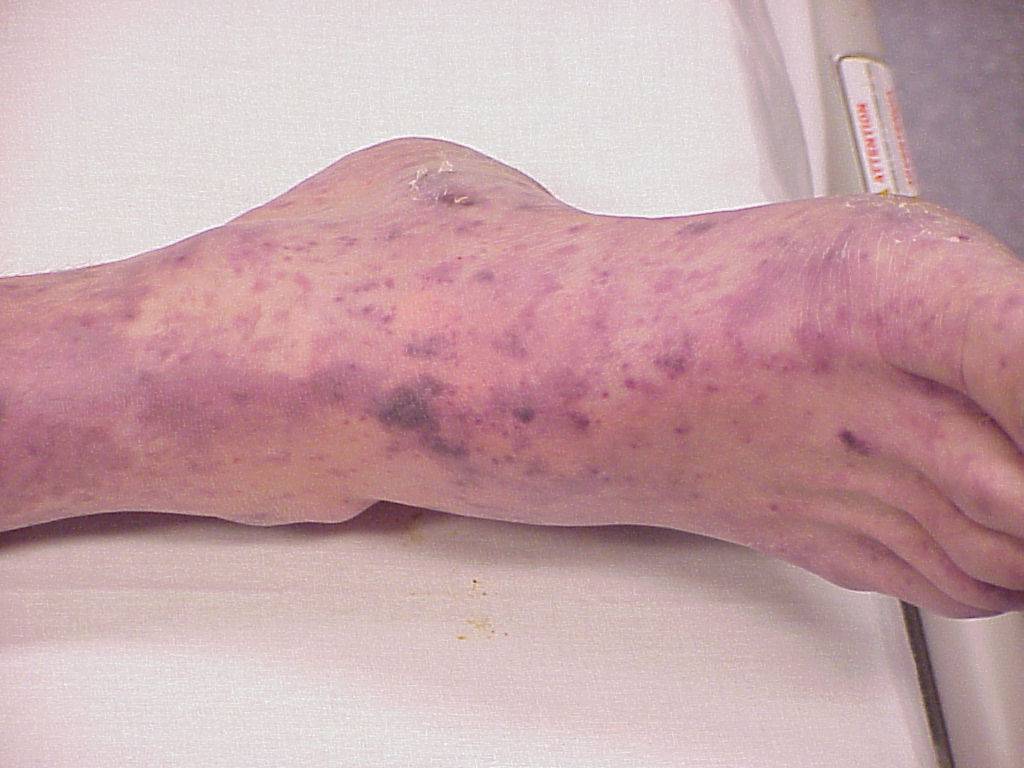 Clinical photograph
What is the most likely diagnosis?
(Marked out of 1.0)
/ 1
State your three (3) treatment priorities.
(Marked out of 3.0)
/ 3
List four (4) steps in managing his hypotension, including drugs and doses where appropriate.
(Marked out of 4.0)
/ 4
Describe five (5) variables you would use to assess response to treatment.
(Marked out of 5.0)
/ 5
Name one (1) landmark sepsis trial.
(Marked out of 1.0)
/ 1
Total Score: 0 / 14
Percentage: 0%
Comments are closed for this SAQ.