You are working in a rural emergency department with onsite general surgery and anaesthetic services, 90 km from a trauma centre. A previously well 35-year-old man with no allergies is brought by ambulance after a motor vehicle crash. He was the restrained driver of a car that skidded in wet weather and hit a tree. His only apparent injury is a strike to the left lateral head.
On arrival he is alert, his pupils are equal and reactive, but he is amnestic to the crash and repeatedly asks what happened. His CT brain images are shown below.
| Observation |
Result |
| Blood pressure |
130/85 mmHg |
| Heart rate |
90/min |
| SpO2 |
98% room air |
| Temperature |
36.5 C |
| GCS |
14 (E4 V4 M6) |
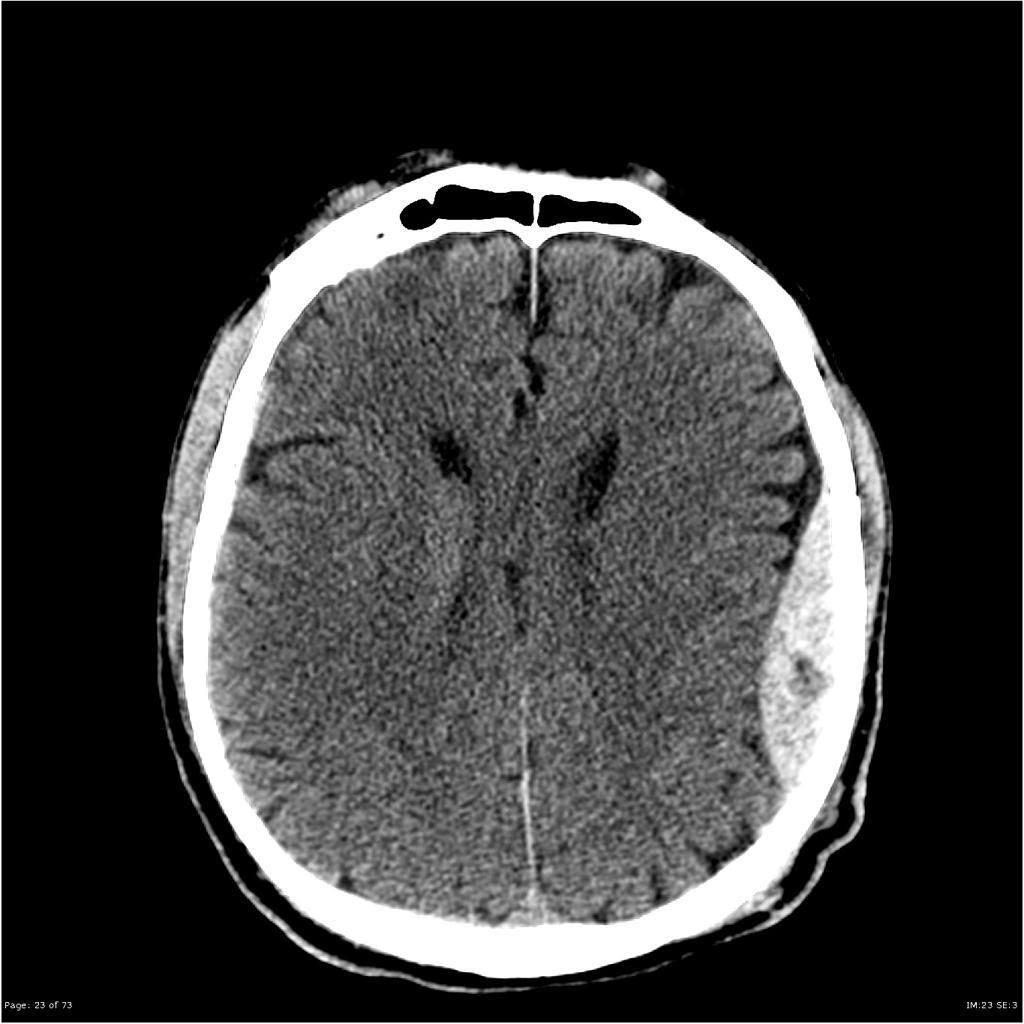 CT brain, soft tissue window
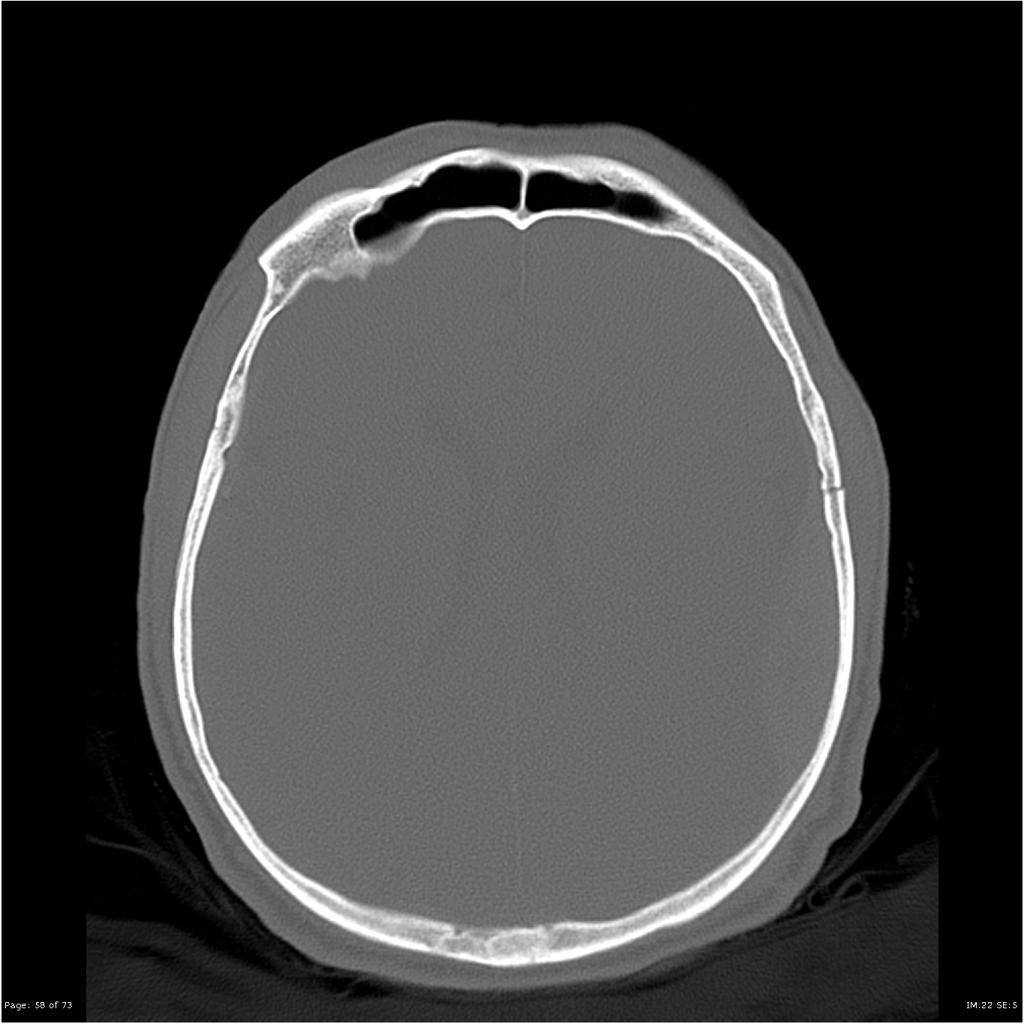 CT brain, bone window
State the three (3) most important abnormal CT findings.
(Marked out of 3.0)
/ 3
After the CT, his GCS falls to 10 (E2 V3 M5) with equal pupils. You decide to intubate him. State five (5) important considerations for intubation.
(Marked out of 5.0)
/ 5
Intubation is uneventful and he remains stable. Helicopters cannot fly because of bad weather, so road transfer is required. List five (5) important steps in preparing him for transfer.
(Marked out of 5.0)
/ 5
As you prepare to leave, he becomes bradycardic and hypertensive, and his left pupil dilates. State five (5) immediate actions.
(Marked out of 5.0)
/ 5
Total Score: 0 / 18
Percentage: 0%
Comments are closed for this SAQ.