A previously well 35-year-old man with no allergies is brought by ambulance to your rural ED, 90 km from the nearest trauma centre.
General surgery and anaesthesia are onsite. He has an isolated head injury. On arrival he is alert, has a headache, is amnestic and repeatedly asks what happened. There are no significant neurological deficits.
After initial assessment he undergoes CT brain and C-spine. Two single CT slices are shown.
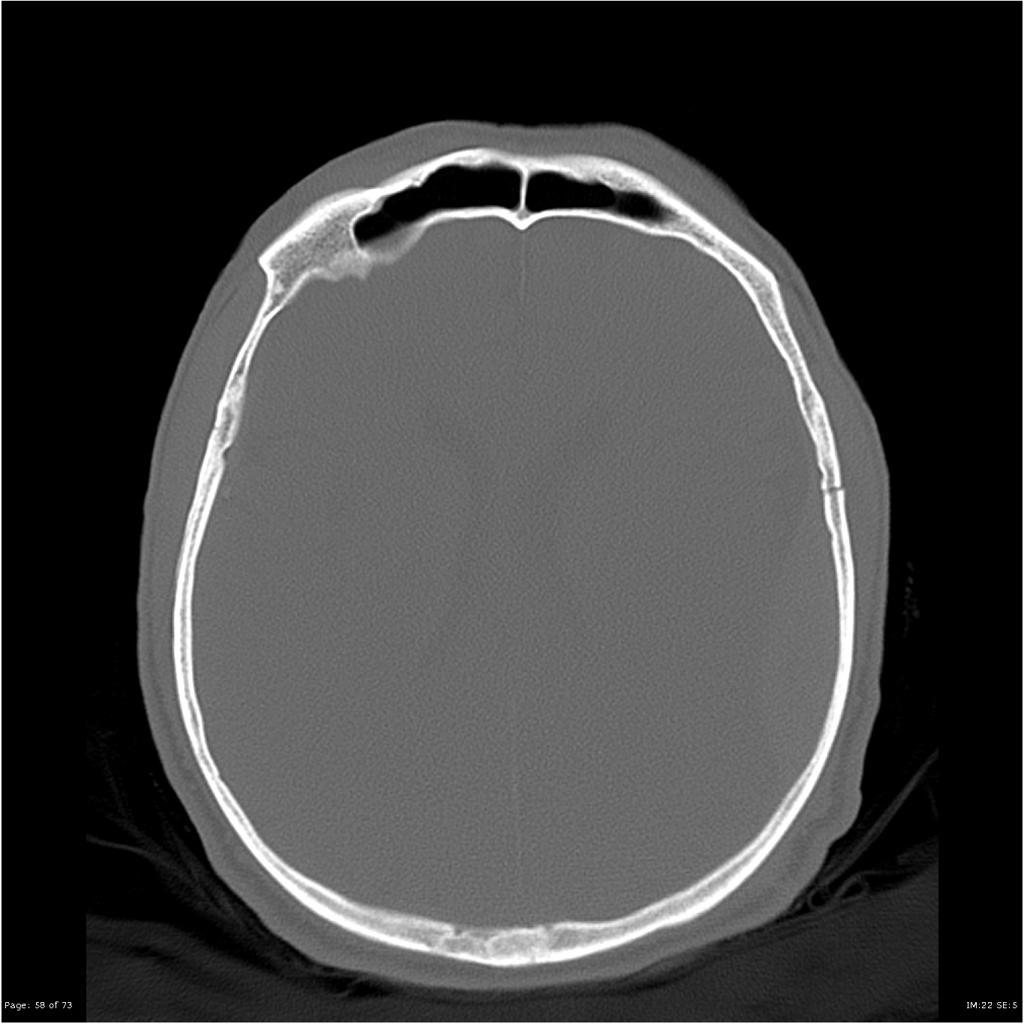 CT skull bone window
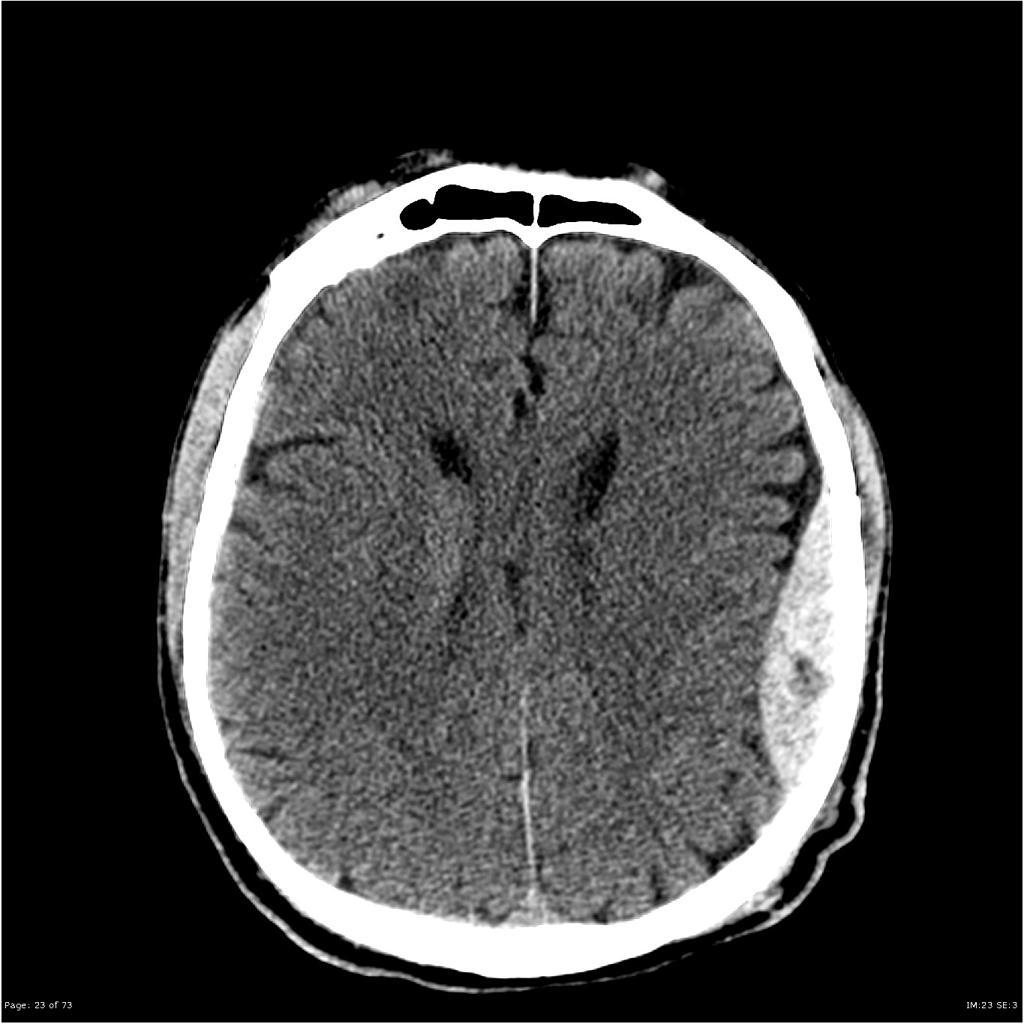 CT brain
List the three (3) most important findings.
(Marked out of 3.0)
| Observation |
Value |
| HR |
90 bpm |
| BP |
130/85 mmHg |
| SpO2 |
98% room air |
| Temperature |
36.5 C |
| GCS |
14 (E4, V4, M6) |
/ 3
Shortly after CT, his GCS falls to 10 (E2, V3, M5), with equal pupils. You decide to intubate him. State five (5) most important peri-intubation considerations specific to this patient.
(Marked out of 5.0)
/ 5
The intubation is uneventful. List three (3) important considerations for ongoing management.
(Marked out of 3.0)
/ 3
Twenty minutes later he becomes bradycardic and hypertensive, and his left pupil dilates. State four (4) immediate actions for this deterioration.
(Marked out of 4.0)
/ 4
A junior registrar assisting you bursts out crying and leaves the resuscitation cubicle. State three (3) actions you would take to manage this situation.
(Marked out of 3.0)
/ 3
Total Score: 0 / 18
Percentage: 0%
Comments are closed for this SAQ.