A 2-year-old child presents to your ED with a generalised tonic-clonic seizure. The seizure-care flowchart, intraosseous needle image and post-intubation chest x-ray are shown below.
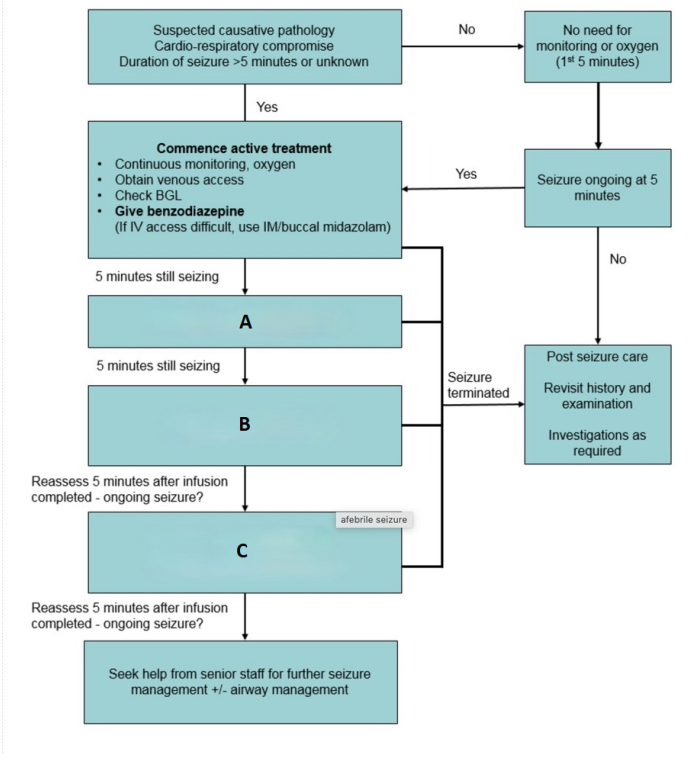 Seizure-care flowchart
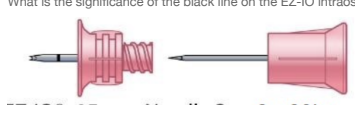 EZ-IO needle
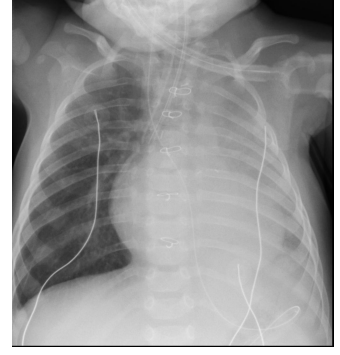 Post-intubation chest x-ray
Complete the table for A, B and C regarding seizure care.
(Marked out of 3.0)
/ 3
The IV cannula dislodges and an intraosseous needle is placed during resuscitative care. What is the significance of the black line on the EZ-IO intraosseous needle?
(Marked out of 1.0)
/ 1
After needle insertion, when should the black line be visible?
(Marked out of 1.0)
/ 1
Complete the table regarding ongoing airway and resuscitative management for this patient.
(Marked out of 6.0)
/ 6
After ETT placement, no breath sounds are heard on the left side of the chest. A chest x-ray is obtained. Outline your next step in management.
(Marked out of 1.0)
/ 1
Total Score: 0 / 12
Percentage: 0%
Comments are closed for this SAQ.