An 80-year-old man is brought to a tertiary trauma centre after being struck by a motorcycle at high speed. His observations are BP 105/80 mmHg, HR 105/min, RR 36/min, oxygen saturation 85% on 15 L/min via non-rebreather mask, and GCS 15. The chest x-ray is shown below.
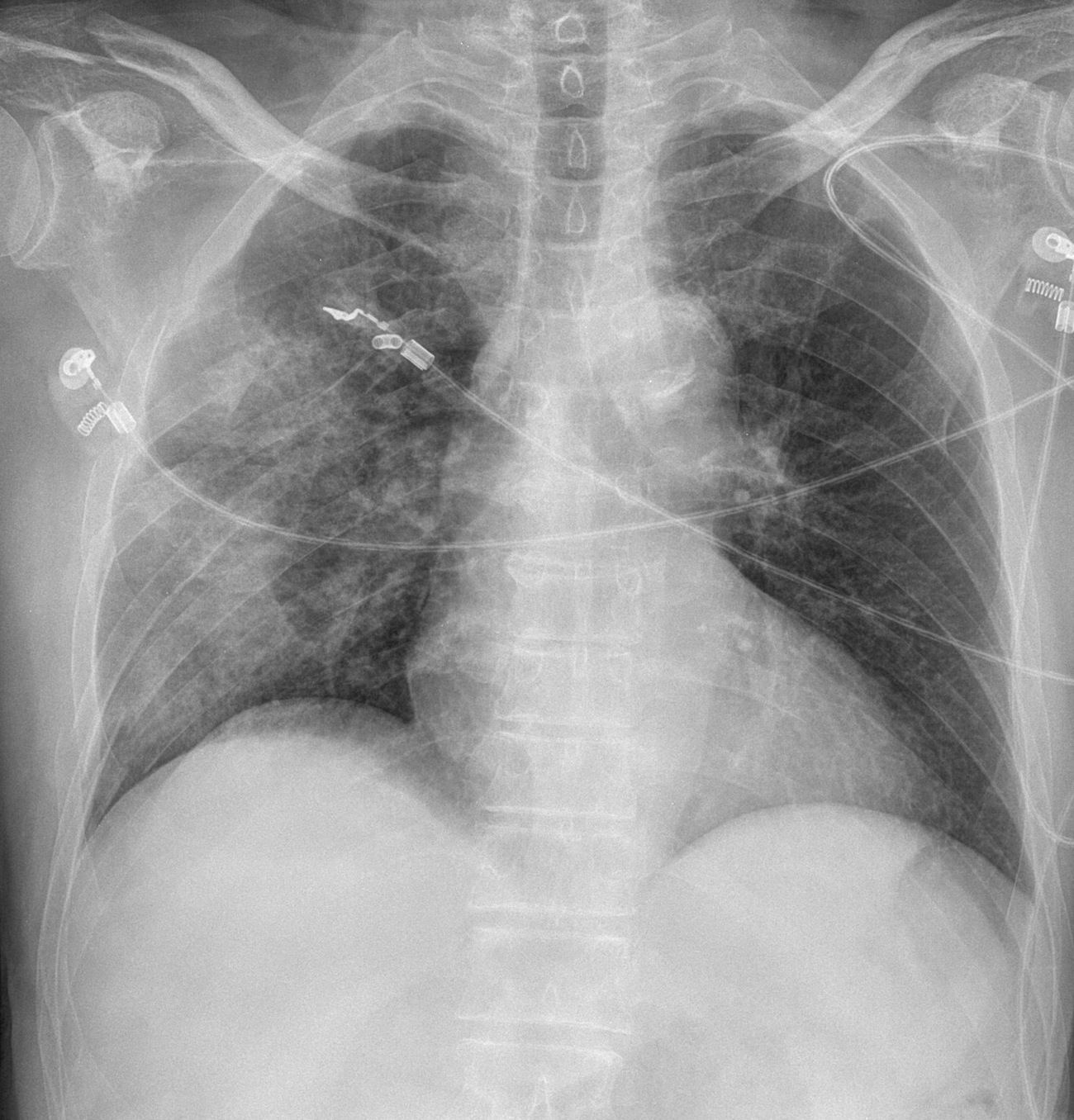 Chest x-ray
State two (2) key features of a "single tier" trauma activation system.
(Marked out of 2.0)
/ 2
State the major limitation of a "single tier" trauma activation system.
(Marked out of 1.0)
/ 1
State two (2) key features of a "two tier" trauma activation system.
(Marked out of 2.0)
/ 2
State the two (2) major effects of a "two tier" trauma activation system compared with a single-tier system.
(Marked out of 2.0)
/ 2
State three (3) abnormalities shown in the chest x-ray.
(Marked out of 3.0)
/ 3
The patient deteriorates and requires rapid sequence induction and intubation. You have appropriate IV access, but no other management has been performed other than rapid sequence intubation. State six (6) management steps to optimise his ventilation following intubation.
(Marked out of 6.0)
/ 6
Total Score: 0 / 16
Percentage: 0%
Comments are closed for this SAQ.