A 50-year-old man presents after palpitations and syncope. He is asymptomatic when the ECG below is recorded.
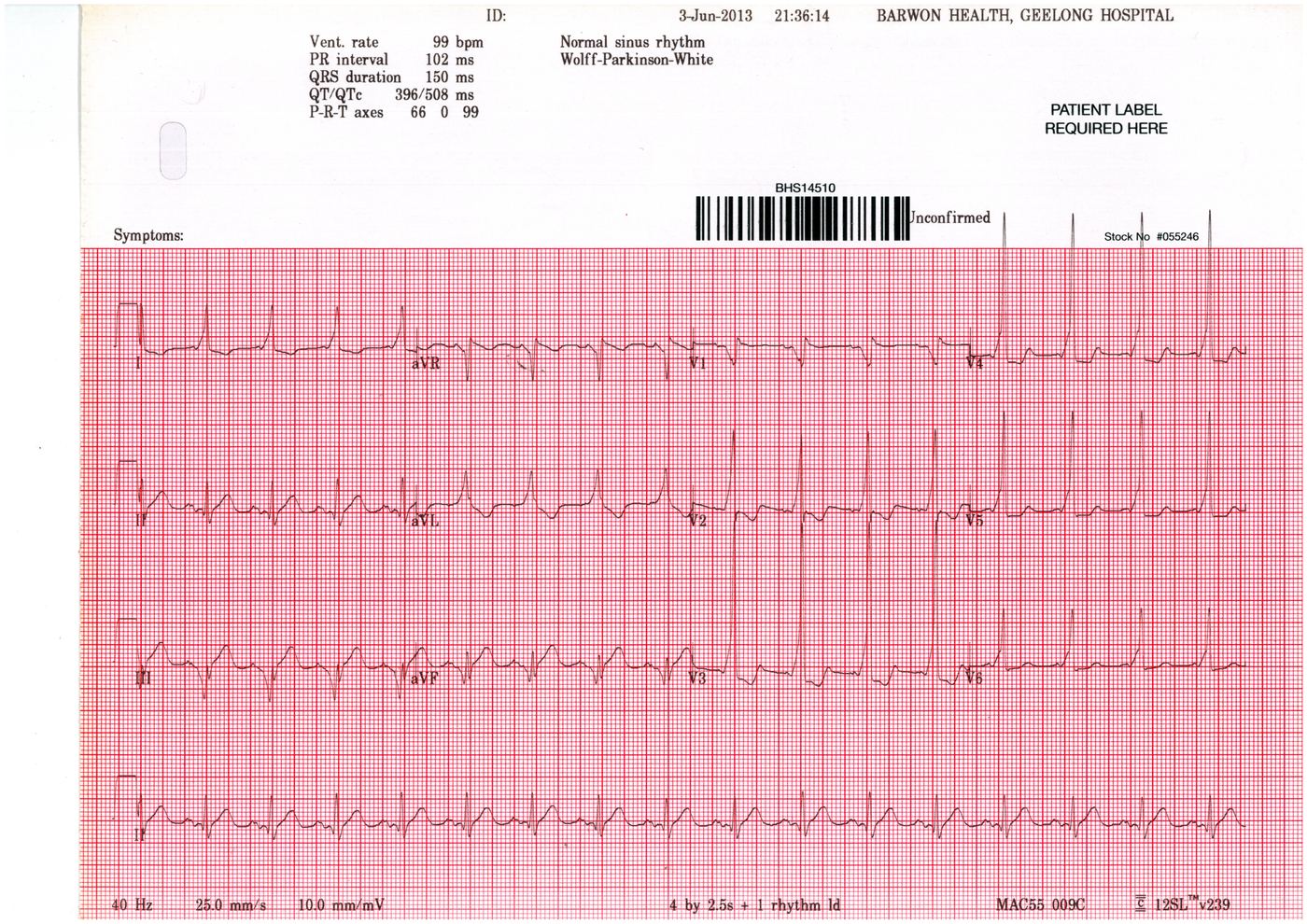 ECG
ECG
State three (3) abnormalities shown in the ECG.
(Marked out of 3.0)
/ 3
He develops persistent atrial fibrillation at 160/min. Other than palpitations, he is asymptomatic and appears well. His BP is 150/85 mmHg, there are no other new ECG changes, and the rhythm persists. He is placed in a resuscitation cubicle with full monitoring applied, and you provide explanation and reassurance. State six (6) key management steps over the next 20 minutes.
(Marked out of 6.0)
/ 6
State three (3) points that justify your selected management approach.
(Marked out of 3.0)
/ 3
Total Score: 0 / 12
Percentage: 0%
Comments are closed for this SAQ.